The idea of military action against Venezuela was first publicly raised by Donald Trump in August 2017, when he stated he was “not going to rule out a military option” to address the crisis and the government of Nicolás Maduro.
While this initial public statement was about a general “military option,” reports from administration officials later indicated that the possibility of invading Venezuela was raised by Trump with senior advisors in a meeting in August 2017.
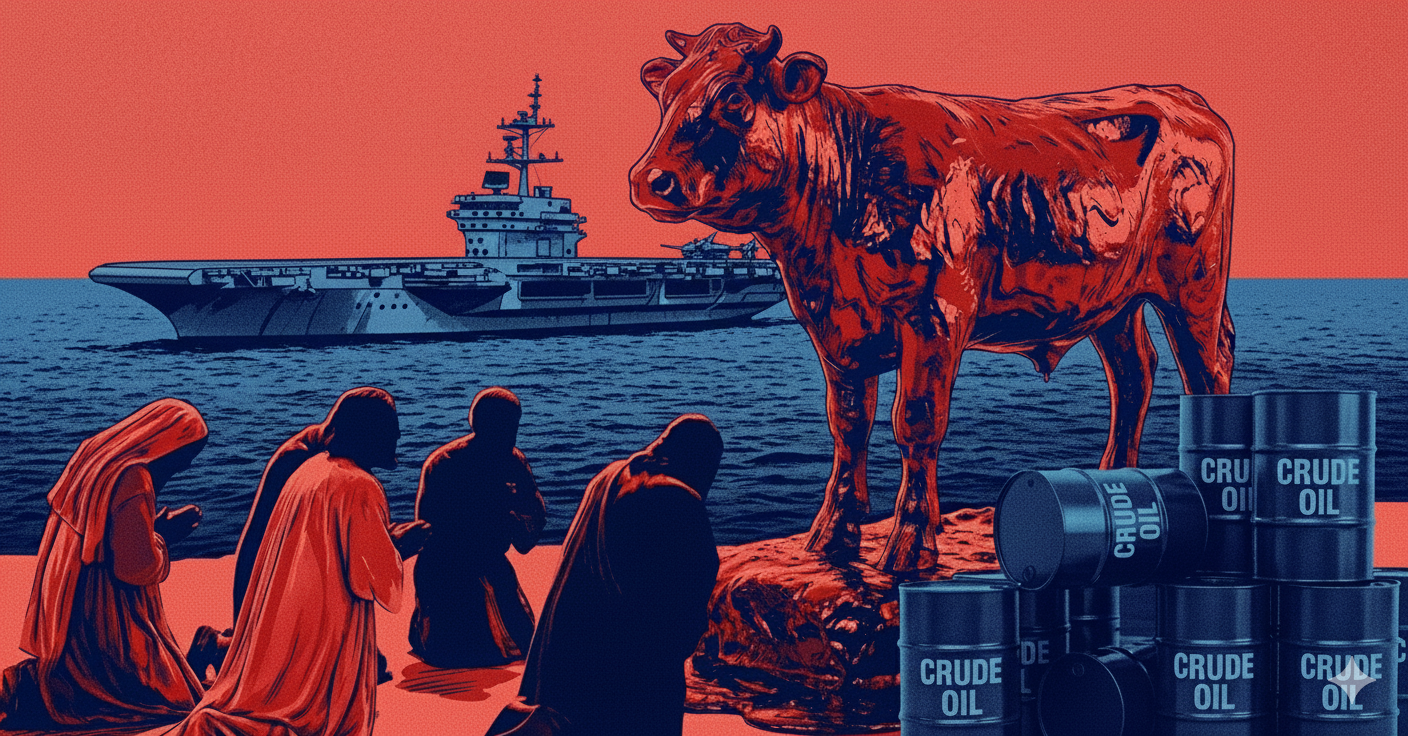
The idea that Trump was primarily focused on oil as the reason for a tough stance on Venezuela has been reported by various media sources over time, often citing insiders or advisors. For example, a 2025 article in The Guardian mentioned that his primary focus in the crisis was “reportedly only cares about the oil.”
In March 2025, he announced that he would be placing a 25% tariff on all imports from any country that buys oil or gas from Venezuela.
Trump Administration: US-Venezuela Relations Timeline
- August 11, 2017: President Trump publicly states that he is “not going to rule out a military option” to address the crisis in Venezuela. This marks the first major public mention of a military action.
- August 24, 2017: Initial Financial Sanctions are imposed via Executive Order 13808. This prohibits transactions related to new debt and equity issued by the Government of Venezuela and the state-owned oil company, PDVSA, severely restricting their access to U.S. financial markets.
2018: Expanding Financial Pressure
- March 2018: Executive Order 13827 prohibits transactions with Venezuela’s digital currency, the petro.
- May 2018: Executive Order 13835 blocks the purchase of Venezuelan debt, further restricting financing for the government and PDVSA.
2019: Maximum Pressure and Oil Sanctions
- January 2019: The U.S. recognizes Juan Guaidó, head of the opposition-led National Assembly, as the interim President of Venezuela.
- January 28, 2019: Crucial Oil Sanctions are imposed. The U.S. Treasury Department effectively freezes all PDVSA assets subject to U.S. jurisdiction and prohibits U.S. persons and entities from dealing with the company. This action dramatically cuts off Venezuela’s primary source of foreign revenue (oil sales to the U.S.).
- April 2019: The U.S. imposes additional sanctions on the Central Bank of Venezuela (BCV), intended to restrict the government’s ability to access or use its international reserves.
2020: Indictments and Increased Military Presence
- March 26, 2020: The U.S. Justice Department unseals indictments against Nicolás Maduro and other senior officials for narcoterrorism and drug trafficking, offering a $15 million reward for information leading to Maduro’s arrest.
- April 2020: The U.S. announces a major increase in naval and air anti-drug trafficking operations in the Caribbean, explicitly citing the indictment of Maduro as a reason for the deployment.
2025: Re-escalation of Military/Oil Focus
- March 24, 2025: President Trump signs an executive order to impose a 25% tariff on all goods imported from any country that buys oil or gas from Venezuela (a secondary sanctions threat), dramatically escalating the economic pressure on those trading with the Maduro regime.
- Late 2025 (Ongoing): The administration intensifies military actions in the Caribbean, including a series of lethal airstrikes on alleged drug trafficking vessels near the Venezuelan coast, amid discussions of potentially expanding military action inland. The U.S. also designates two Venezuelan criminal groups, the Cartel de los Soles and the Tren de Aragua, as Foreign Terrorist Organizations (FTOs).
The 2017 statements established the military threat, but the most significant action directly targeting Venezuela’s ability to sell its oil—the ultimate leverage point—came with the January 2019 sanctions on PDVSA.
Impact on Oil Production and Revenue
The most critical sanctions were the financial sanctions in 2017 (blocking access to credit) and the oil sanctions in January 2019 (prohibiting US entities from importing Venezuelan oil or exporting refined products to it).
- Accelerated Production Collapse: Venezuela’s oil production was already declining due to mismanagement, underinvestment, and lack of maintenance. However, the sanctions caused the decline to accelerate dramatically. After the 2017 financial sanctions, the average monthly decline in production increased nearly five-fold compared to the pre-sanctions period.
- Loss of Key Market (US): The US was historically Venezuela’s largest customer for crude oil. Cutting off this market, which provided hard currency and was geographically close, forced the state-owned oil company, PDVSA, to seek new, less lucrative buyers in countries like China and India, often requiring significant price discounts to offset the risk of secondary sanctions.
- Reduced Revenue: The collapse in production and the need for deep discounts led to a massive drop in government revenue. One estimate suggests the 2019 oil sanctions were expected to cause Venezuela to lose $11 billion annually in oil export revenue.
Broader Economic and Humanitarian Effects
Because Venezuela relies on oil for over 90% of its export revenue, the collapse of the oil sector had cascading effects across the entire economy:
- Deepening Economic Depression: Venezuela’s economy was already in a severe recession. The sanctions exacerbated the crisis, contributing to the country’s historic loss of over 80% of its GDP since 2013, a collapse comparable to countries in wartime.
- Hyperinflation and Imports: The steep fall in foreign currency revenue (dollars from oil) severely limited the government’s ability to import essential goods like food, medicine, and industrial parts. Imports of food and medicine fell drastically, fueling hyperinflation and critical shortages.
- Humanitarian Crisis: The economic collapse and lack of foreign exchange for basic goods led to increased malnutrition, disease, and mortality rates. Reports indicate that sanctions contributed to a reduction in the public’s caloric intake and increased the difficulty for NGOs to deliver aid due to banking restrictions.
- Refugee Crisis: The compounding economic hardship and lack of basic services have fueled the second-largest refugee exodus in the world, with millions of Venezuelans fleeing the country.
In summary, while the sanctions successfully choked off revenue for the Maduro regime, they did not lead to a change in government and significantly worsened the dire living conditions for Venezuelan citizens, accelerating a humanitarian crisis already in motion.